
|
Download ESL Books + Free PDFs
Save 25% on ESL Books for Teachers & Students Visit the ESL Expat Store and enter "SAVE25" at checkout! |
 Order books in print or in PDF format.
At some point in learning English, progress becomes difficult to measure. In the beginning, improvement feels fast. You learn new words, understand grammar rules, and start recognizing phrases in movies or articles. But after reaching an intermediate level, things slow down. You understand most of what you hear and read, yet speaking still feels uncomfortable.
This stage is confusing. You know English, but you do not feel fluent. You hesitate, pause too much, or simplify your ideas when speaking. Many learners assume they need more grammar or more vocabulary, but often the real issue is different. The problem is not knowledge. The problem is lack of regular speaking practice.
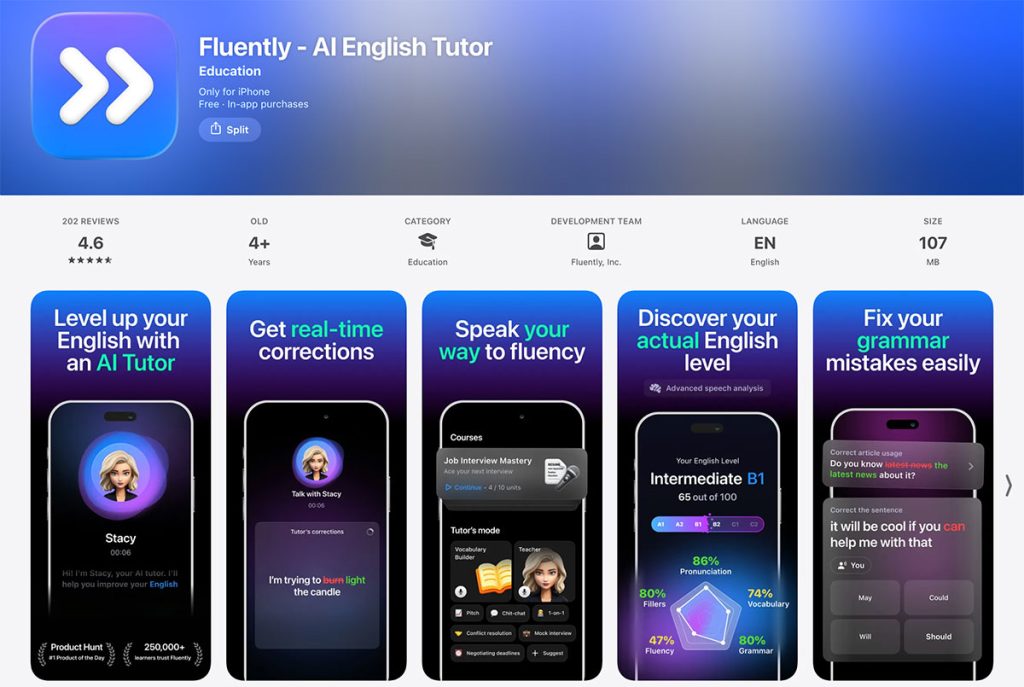
This is where Fluently, an AI English tutor focused on speaking, becomes relevant. This article is a detailed and honest Fluently AI tutor review, written with realistic expectations and long-term learning in mind. Fluently is not a shortcut to fluency, but it can be a strong supporting tool when used correctly.
Why Speaking Is the Hardest Part of English Learning
Speaking English requires active use of everything you know. Grammar, vocabulary, pronunciation, and confidence must work together in real time. You cannot pause for too long or carefully plan every sentence. This is why speaking is often the weakest skill, even for people who understand English very well.
Most English learning tools do not focus on this stage. Beginner apps are designed to teach basics. They rely heavily on exercises where you choose the correct answer instead of creating your own sentences. These apps are useful at the start, but they do not prepare you for real conversations.
Human tutors are effective, but they come with limitations. They are expensive, require scheduling, and are not always available when you feel motivated to practice. Speaking once a week is rarely enough to build fluency.
To speak fluently, you need frequent practice. This is the gap that Fluently tries to fill.
What Fluently Is Designed to Do
Fluently is your personal AI English tutor for improving speaking skills. It is built for learners who already know the basics of English and want to speak more confidently and naturally.
Instead of structured lessons or grammar explanations, Fluently offers real-time conversations. You talk, the AI responds, and the interaction feels similar to speaking with a patient conversation partner. After each session, Fluently provides personalized feedback focused on fluency, pronunciation, clarity, and grammar patterns.
The idea behind Fluently is simple but important. If you want to speak English fluently, you need to speak regularly. Fluently makes this possible without scheduling, pressure, or high costs.
First Impressions and Early Experience
The first experience with Fluently is straightforward. There is no long onboarding or complex setup. You are encouraged to speak almost immediately. This sets the tone. Fluently is not about studying. It is about using English.
At first, speaking to an AI feels a bit unusual. That feeling does not last long. The responses feel natural, and the conversation flows better than expected. Because there is no fear of being judged, it becomes easier to speak freely.
This is an important detail. Fear and self-consciousness often block speaking. Fluently removes that barrier by creating a safe space where mistakes are part of the process.
Understanding the Fluently Assessment
One of the most discussed aspects of Fluently is its assessment. Many learners expect a traditional English test that gives a clear level such as B2 or C1. Fluently does not work this way.
The assessment in Fluently is designed to understand how you speak, not to label your level. It analyzes fluency, pronunciation, clarity, and confidence. This information is used to personalize your learning plan and adapt conversations to your needs.
Over time, as you speak more, the system gathers more data. This makes the assessment more accurate and useful. Instead of focusing on a single score, Fluently focuses on trends and improvement.
This approach supports long-term progress rather than short-term evaluation.
Personalized Feedback as the Main Strength
Personalized feedback is one of the strongest features of Fluently. After each conversation, Fluently highlights patterns in your speech. This includes grammar habits, pronunciation issues, and sentence structure.
What makes this feedback effective is its focus. Fluently does not overwhelm you with corrections. It focuses on recurring patterns that affect fluency. This helps learners improve faster because attention is directed to the most important areas.
Over time, this feedback builds awareness. You start recognizing your own habits while speaking. This self-awareness is essential for becoming fluent, and it is something many learners struggle to develop on their own.
Daily Speaking Practice That Fits Real Life
One of the biggest advantages of Fluently is accessibility. You can practice English speaking any day, at any time. Even short sessions are valuable.
Fluently allows you to practice different situations. Interviews, meetings, presentations, or everyday topics. This makes practice relevant and practical.
Because Fluently is available 24/7 and is 20x cheaper than a human tutor, daily practice becomes realistic. Consistency matters more than intensity. Speaking a little every day is more effective than long sessions once a week.
Progress Tracking and Motivation
Fluently tracks progress over time. Instead of focusing on individual sessions, it shows improvement trends. This helps learners see that progress is happening, even if it feels slow day to day.
Seeing progress builds motivation. It reinforces the idea that regular speaking leads to better fluency, clearer expression, and more confidence.
This long-term view is important. Fluency is not built overnight. Fluently supports this gradual process.
How Fluently Fits Into a Learning Routine
Fluently works best as part of a balanced learning system. Reading and listening provide input. Speaking with Fluently provides output.
Many learners focus too much on input and not enough on output. Fluently helps correct this imbalance. It keeps speaking skills active and prevents knowledge from staying passive.
Used regularly, Fluently becomes a reliable part of daily English practice.
Comparing Fluently With Other Learning Tools
Fluently does not replace human teachers, courses, or textbooks. It complements them.
Human teachers provide depth and explanation. Courses provide structure. Fluently provides frequency and accessibility.
This combination works well for learners who want steady improvement without relying on a single method.
Limitations to Understand
Fluently focuses on spoken English. It does not aim to teach advanced grammar theory or academic writing. Learners who need deep theoretical explanations may use additional resources.
Another important point is that results depend on consistency. Fluently works best when used regularly. Like any speaking practice, progress comes from repetition over time.
These limitations are about scope, not quality. They help set the right expectations.
Who Fluently Is Best For
Fluently is especially useful for learners who already understand English but want to speak it confidently. It works well for professionals, job seekers, founders, and salespeople who need English for real communication.
If your main challenge is speaking rather than understanding, Fluently addresses that need directly.
Final Thoughts
Fluently is not a magic solution, and it does not promise instant fluency. What it offers is something more realistic and more valuable. A way to practice speaking English regularly, receive personalized feedback, and improve steadily over time.
Used consistently, Fluently becomes a strong supporting tool for anyone serious about improving English speaking skills and building confidence in real conversations.