
|
Download ESL Books + Free PDFs
Save 25% on ESL Books for Teachers & Students Visit the ESL Expat Store and enter "SAVE25" at checkout! |
 Order books in print or in PDF format.
Interactive ESL Activities That Boost Participation
Board race games are one of the most effective ways to energize a classroom, especially in ESL settings where student engagement and quick thinking are essential. By choosing the right board race game topics for students, teachers can turn vocabulary review, grammar practice, and speaking activities into exciting competitions that motivate even reluctant learners.
In this article, we’ll explore what makes board race games so effective, how to set them up successfully, and a wide range of classroom-tested board race game topics for students at different ages and proficiency levels. Whether you teach young learners, teens, or adults, these ideas will help you create fun, low-prep lessons that maximize language output.
What Is a Board Race Game?
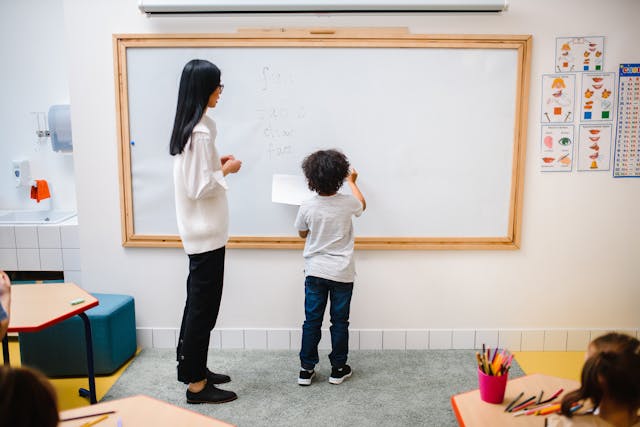
A board race game is a competitive classroom activity where students work in teams to write answers on the board as quickly and accurately as possible. The teacher calls out a prompt or category, and one student from each team races to the board to write a correct response. Points are awarded for speed, accuracy, or both.
Board race games are especially popular in ESL classrooms because they combine:
-
Physical movement
-
Teamwork
-
Language recall
-
Time pressure
This combination keeps students focused and actively using English rather than passively listening.
For a general overview of board race activities in ESL, you can explore this teaching guide from the British Council.
Why Board Race Games Work So Well for ESL Students
Using the right board race game topics for students can dramatically improve participation and retention. Here’s why they work so well:
-
Increased motivation: Competition adds excitement and encourages participation.
-
Immediate feedback: Teachers can instantly correct mistakes on the board.
-
Active learning: Students are physically and mentally engaged.
-
Low preparation: Most board race games require little to no prep.
-
Adaptability: Topics can be adjusted for any level or age group.
According to Edutopia, movement-based learning activities like board races can significantly improve focus and memory in students.
How to Set Up a Board Race Game
Before diving into specific board race game topics for students, it’s important to set the activity up correctly:
-
Divide the class into 2–4 teams.
-
Give each team a marker or piece of chalk.
-
Line students up behind their teams.
-
Explain the category or prompt clearly.
-
Call “Go!” and let one student from each team race to the board.
-
Rotate students so everyone participates.
Clear rules and modeling one example round will help avoid confusion.
Vocabulary Board Race Game Topics for Students
Vocabulary-based board races are perfect for warm-ups and review lessons.
1. Food Categories
Students race to write foods in specific categories such as fruits, vegetables, desserts, or drinks.
Example prompts:
-
Write a fruit
-
Write a breakfast food
-
Write a healthy food
2. Animals
This classic topic works especially well for young learners.
Variations:
-
Farm animals
-
Wild animals
-
Sea animals
3. Jobs and Occupations
Ideal for teens and adults learning functional English.
Prompt examples:
-
Write a job that works at a hospital
-
Write a job that uses a computer
For more ESL vocabulary teaching ideas, you can reference ESL Authority.
Grammar-Based Board Race Game Topics for Students
Grammar board races help reinforce structure while keeping things fun.
4. Verb Tenses
Students race to write:
-
A past tense verb
-
An irregular verb
-
A verb in the present continuous form
5. Sentence Building
Call out a structure and have students write a complete sentence.
Examples:
-
Write a sentence using “because”
-
Write a sentence in the future tense
6. Question Forms
Students write:
-
A yes/no question
-
A WH-question
-
A polite request
Grammar-based board race game topics for students work best when the teacher quickly reviews mistakes after each round.
Speaking and Conversation Board Race Topics
Board races don’t always need long written answers. Short phrases and ideas work well for speaking-focused lessons.
7. Conversation Starters
Students write short conversation questions, such as:
-
What’s your favorite movie?
-
Where do you want to travel?
After the race, students can ask and answer the questions orally.
8. Opinion Topics
Students write opinions using sentence starters like:
-
I think…
-
In my opinion…
This is especially effective in adult ESL classes.
For more ideas on communicative ESL activities, Teaching English British Council offers excellent resources.
Board Race Game Topics for Young Learners
When teaching kids, simplicity and visuals are key.
9. Colors and Shapes
Students race to write:
-
A color
-
A shape
-
Something that is blue
10. Classroom Objects
Perfect for beginner-level students.
Examples:
-
Write something you see in the classroom
-
Write something in your school bag
Young learners benefit greatly from repetition, and board races provide that without boredom.
Advanced Board Race Game Topics for Older Students
For higher-level learners, challenge them with thinking-based prompts.
11. Synonyms and Antonyms
Students write:
-
A synonym for “happy”
-
An antonym for “expensive”
12. Phrasal Verbs and Idioms
Examples:
-
Write a phrasal verb with “get”
-
Write an idiom about money
Advanced learners enjoy the challenge, especially when topics relate to real-life language use.
You can find more advanced ESL teaching strategies at International TEFL Academy.
Classroom Management Tips for Board Race Games
To keep board races effective and controlled:
-
Limit writing to 1–3 words when possible
-
Set clear time limits
-
Rotate students fairly
-
Emphasize accuracy over speed when needed
-
Use positive reinforcement instead of penalties
Board race games should feel fun, not stressful.
Why Board Race Game Topics for Students Matter
Choosing the right board race game topics for students can transform a routine ESL lesson into an engaging, high-energy experience. Whether you’re reviewing vocabulary, practicing grammar, or encouraging conversation, board races provide a flexible and proven method for increasing participation and language output.
By varying topics, adjusting difficulty levels, and keeping instructions clear, teachers can use board race games regularly without students losing interest. Best of all, these activities require minimal preparation and work in almost any classroom setting.
For additional ESL classroom inspiration and lesson ideas, you can also explore the Busy Teacher website.